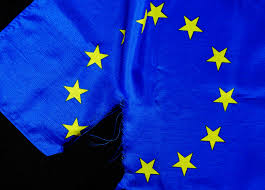
The creation of the European Union was perhaps the most groundbreaking milestone for world peace and international cooperation in history. The institution was crafted with the best of intentions- “to promote greater social, political and economic harmony among the nations of Western Europe.” Today, the EU is comprised of 28 different member nations, from Sweden to Malta. Yet, the current political climate across the globe is more unstable than ever and the EU is no exception. It’s not uncommon to overhear phrases like, “The EU is done for,” or “The EU has no influence anymore.” Why is this? Why is it that such a vast and powerful institution presumably can’t do its job anymore?
Perhaps the main culprit of this phenomenon is the Euro. An astounding number of EU economies have fallen into deficit since they’ve adopted the Euro, particularly in southern Europe. The creation of a single currency to serve an extremely large and economically diverse region was never going to be an easy task. One common currency necessitates one common interest rate. While that interest rate might suit one country’s economy, it may prove disadvantageous, or even disastrous for another. Moreover, many southern European nations were simply not equipped to join the Eurozone. The Eurozone’s tight fiscal policy- which perfectly suited countries like Germany, contradicted the historically lax economic policies of southern Europe. These countries, who were accustomed to borrowing money and inflating their currencies, essentially became hostage to Germany once they embraced the Euro. Basically, the creation of the Eurozone forced German economic policy on the rest of the EU.
The immigration crisis of the last decade has also put a massive strain on the EU, and has been the source of much of the Euroscepticism we see today. The influx of migrants has caused an economic burden for certain EU nations. It has also exacted a sense of xenophobia for many EU citizens, whether it be justified or not. This in turn causes hyper nationalism, which leads to the creation of populist and far-right movements. This is especially evident in eastern Europe, though the trend can be seen throughout Europe. For instance, politicians Marie Le Pen in France and Geert Wilders in the Netherlands have both garnered support running on xenophobic populist platforms. One of the fundamental policies of the EU is open borders. Members nation of the EU do not have total control over their borders. This policy, in combination with the migrant crisis, creates a lot of tension and progresses the sense of Euroscepticism evident in EU nations today.
Of course, there are many other trends and events that are believed to have caused the perceived “failure” of the EU. In Great Britain, politicians were able to cite enough flaws in the institution to convince the nation to exit it. However, there are those who believe the EU will prevail. The next few years will continue to be a trying time for the EU, and it will be interesting to see how and if the institution survives.
 Caroline Cox
Hi Caroline! Great post, very interesting perspective on the role of the EU in a fractured European continent. Voting within the EU bloc in the United Nations also shows that competing national agendas and identities prevent cohesion amongst EU states. From anything related to nuclear nonproliferation to changes to the Security Council to budgetary concerns in the General Assembly. In addition, several smaller states in Central and Eastern Europe are moving further and further away from the EU both culturally and from a policy perspective. What do you think the role of the EU is, in terms of leveraging socially progressive values? It might also be argued that Brexit is sad but unsurprising, given their historic opposition to such elements of the EU, such as the euro, the Schengen visa zone, and cultural solidarity. Do you think that the EU might endure without these coded European mainstays? What might the EU look like without a passport-free zone?
Looking forward to your next post!
LikeLike